back

More Work

Emotion in Type

Speculative Inquiry
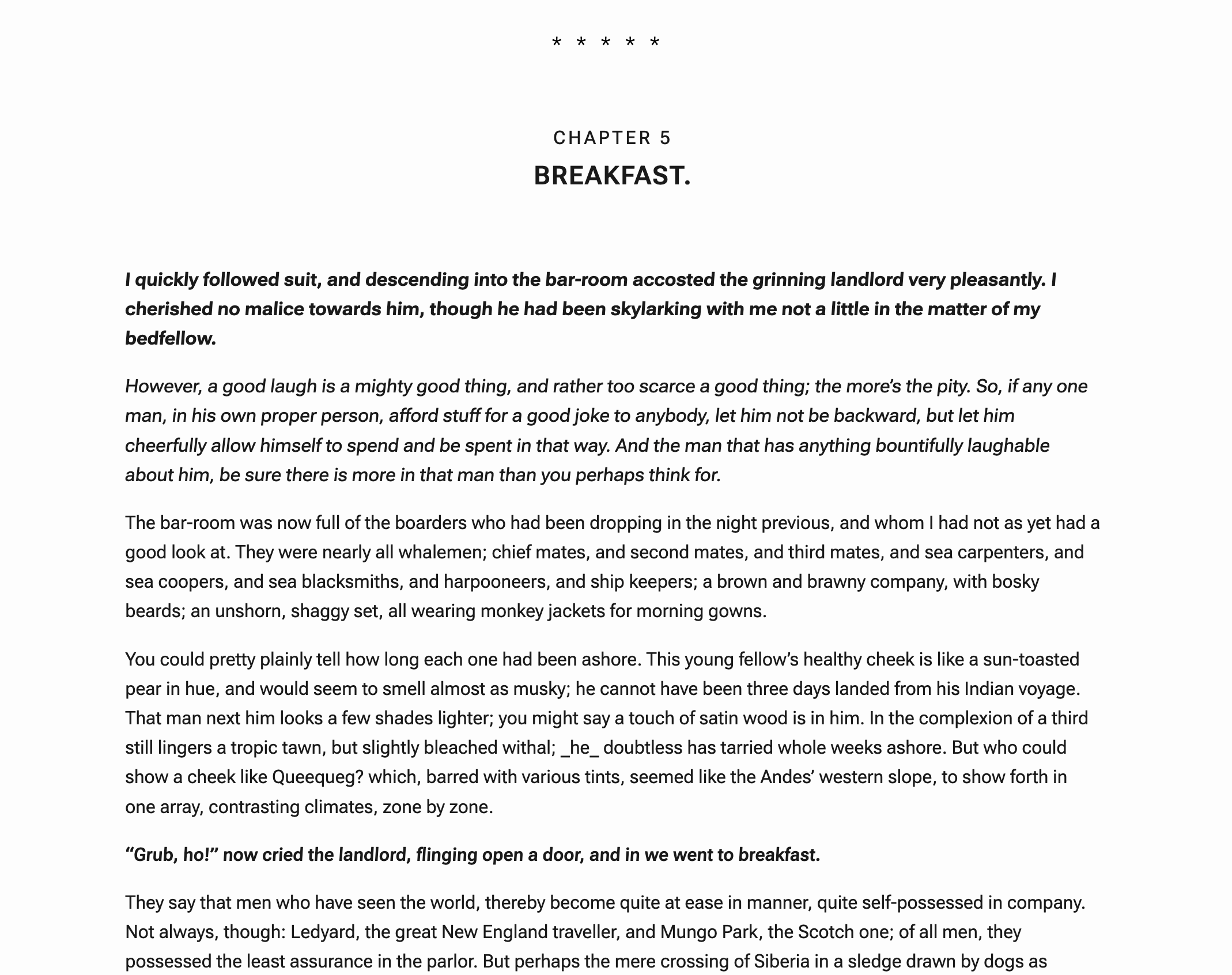
While typography often carries emotion in visual culture, long-form reading remains neutral. Why is expression stripped from literature?This project explores the relationship between semantic sentiment and visual form through a real-time, NLP-driven generative system.To preserve legibility, the system uses a parametric variable font that maintains a consistent visual structure while introducing sentiment-based micro-modulations. The result is a text that responds to the narrative as an experimental reading experience.
01
Data Mining
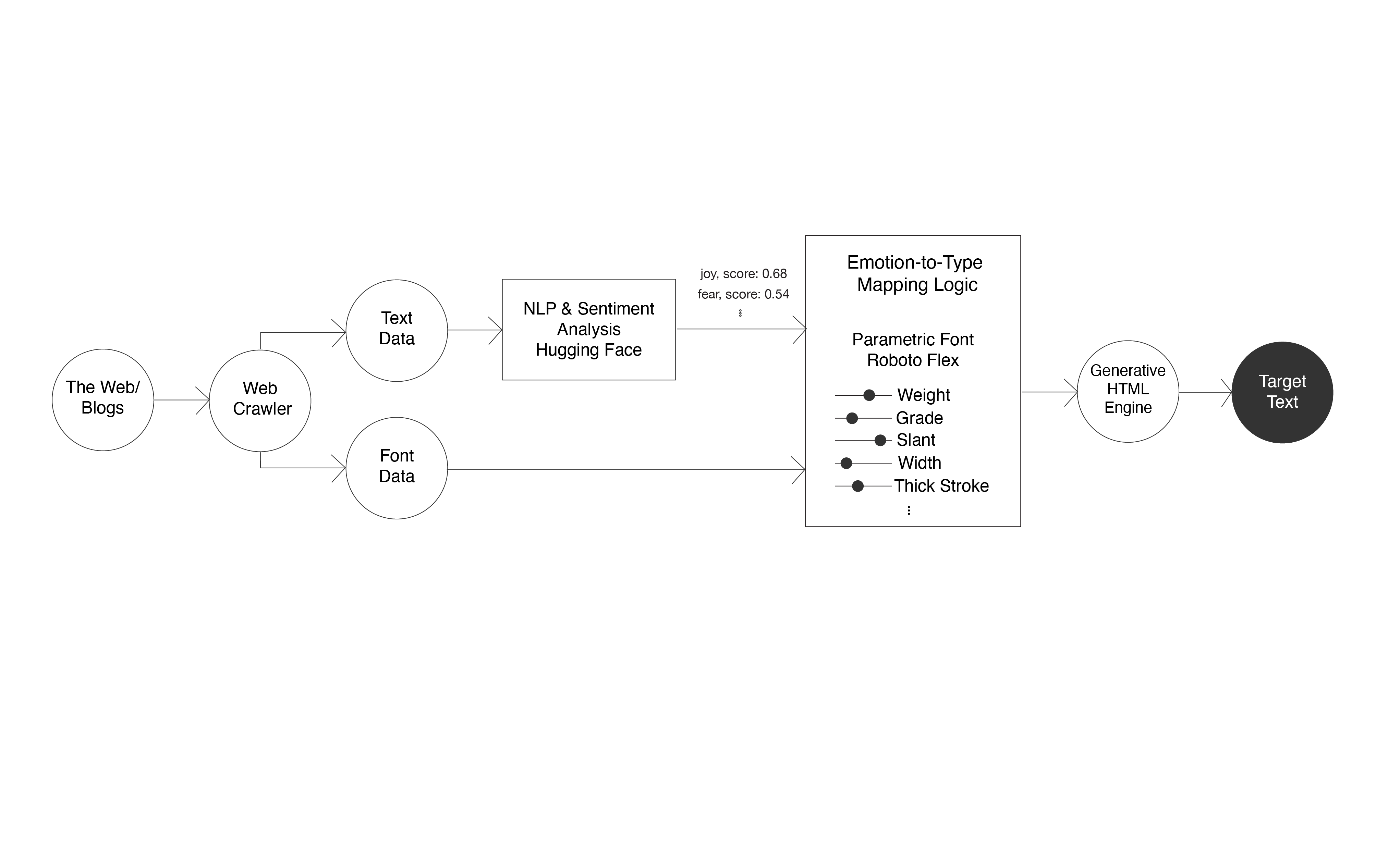
A custom Python web-crawler scanned thousands of blog posts, extracting both the textual content and the CSS font-family used to display it. This created a dataset linking text to real-world typographic choices.
02
Sentiment Analysis
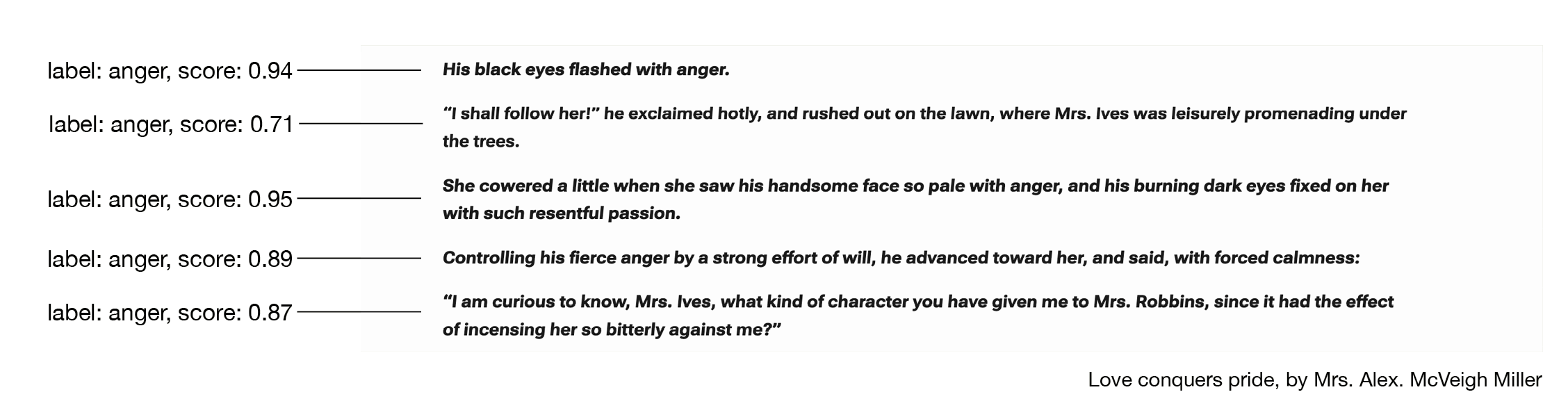
Using Hugging Face transformers, the system analyzes text sentiment and correlates it with extracted typographic features.
03
Parametric Translation
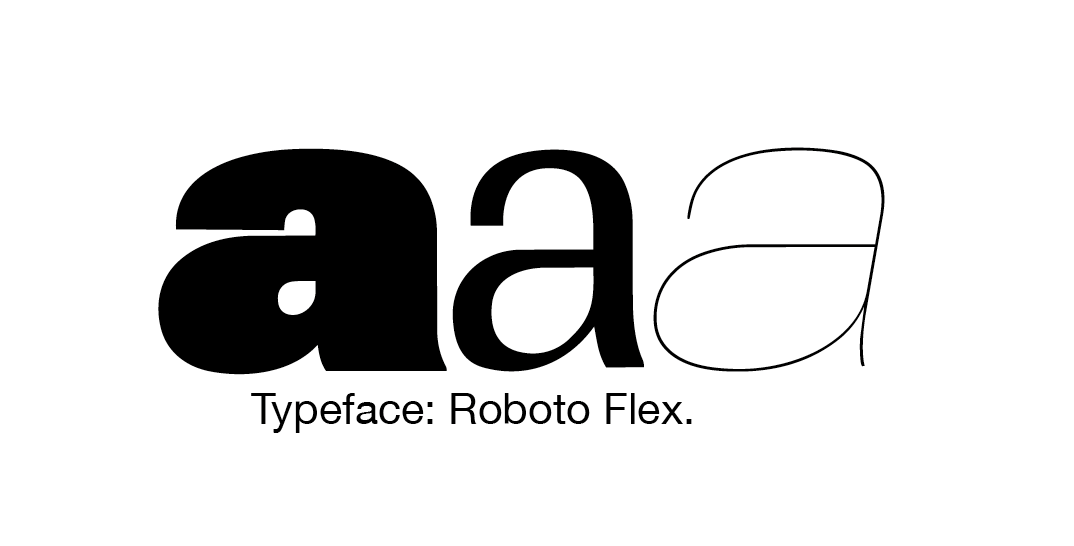
Sentiment scores drive multiple parametric axes in the Roboto Flex font, allowing typography to morph dynamically in real time as emotional intensity shifts.
04
Generative Rendering
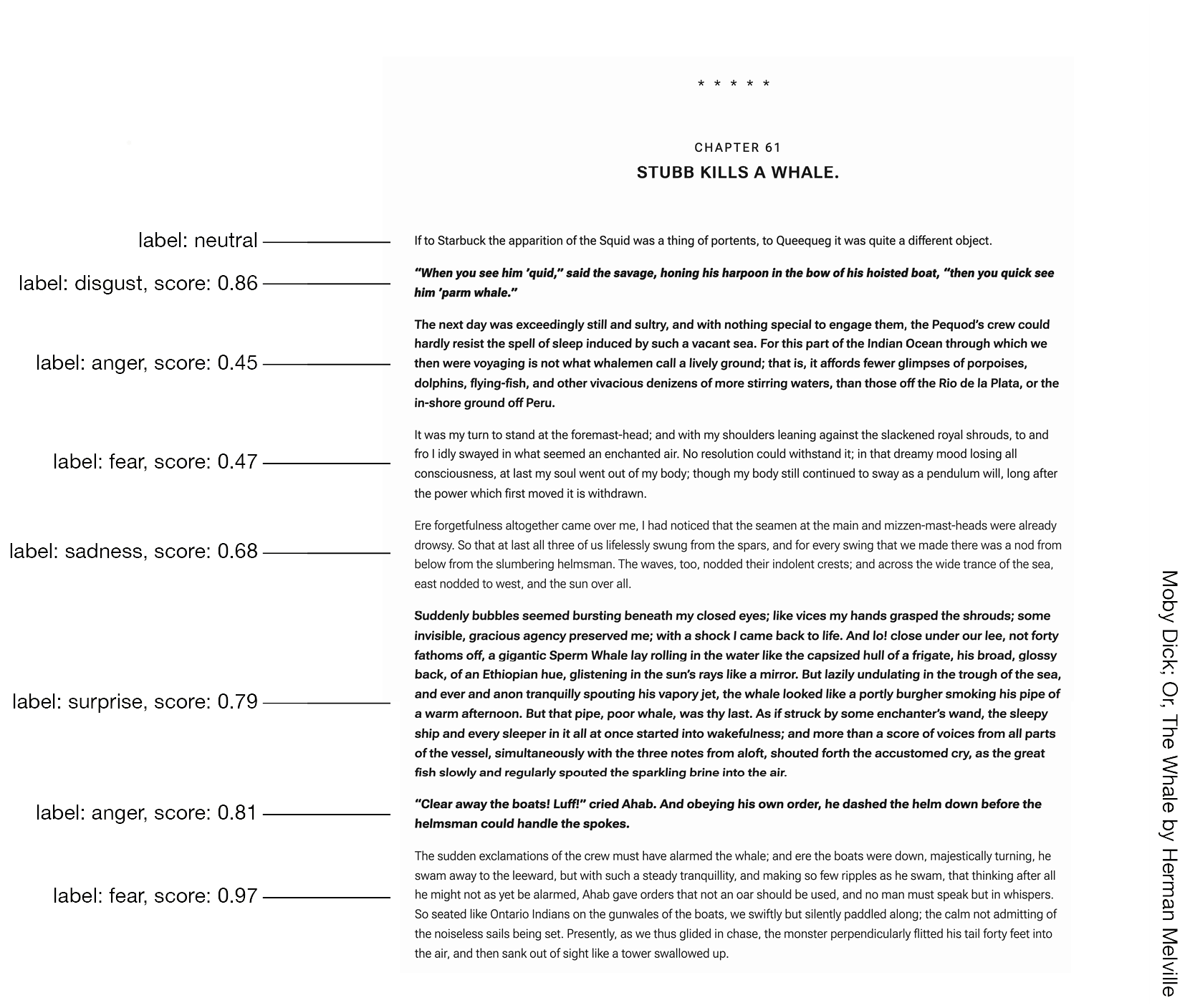
Designed as a content-agnostic engine, the system processes any text in real time. Demonstrated using Moby-Dick, the typography morphs with shifting sentiment, creating an affective reading experience shaped by each narrative’s emotional arc.
05
Dynamic Interpolation
To bridge the gap between raw data and visual form, I developed a linear interpolation function. Instead of static presets, the system dynamically maps the NLP confidence score (0.0–1.0) directly to the font’s axis range.
Designing this system challenged my traditional role as a visual maker. Instead of manually crafting the typography, I had to craft the logic that generates it.
Future Scope: Semantic Infographic
The ultimate evolution of this project lies in merging the Semantic Font with the Social Platform. By deploying a bespoke variable font with emotive axes, such as ‘Hostility’ or ‘Empathy’, the text itself transforms into a semantic infographic. This will allow users to scan the ‘emotional topography’ of a discussion and identify hostile zones to avoid.